The Challenge: The “Wellbeing Gap”
Most organisations invest in wellness, yet burnout and turnover remain high. Why?
- Surface-Level Metrics: Tracking participation rates (vanity metrics) instead of actual psychological resilience.
- Reactive Approaches: Treating symptoms rather than addressing the root causes within organisational culture.
- Lack of Strategy: Wellbeing initiatives that aren’t aligned with broader business goals like retention and productivity.
- Lack of Data: The data of one organisation does not allow to understand employee subgroups across the most relevant dimensions
Our Solution: Data-Driven Organisational Health
In partnership with Worklife.Digital, we provide a data product that treats wellbeing as a disciplined science.
We don’t just “measure”; we diagnose and suggest treatments, and provide a path to sustainable performance.


Powered by Worklife Quotient (WL-Q)
Our product utilizes the WL-Q, a tool modeled on cutting-edge scientific research to provide:
- Deep Intelligence: Measurement of individual psychological resilience and functional wellbeing.
- Systemic Analysis: Insight into how leadership styles, company culture, and workload impact your team’s mental health.
- Strategic Recommendations: Actionable steps to mitigate risks and amplify existing strengths.
People Data Collaboration adds
- Benchmarking: Highly segmented benchmarking on the most relevant dimensions
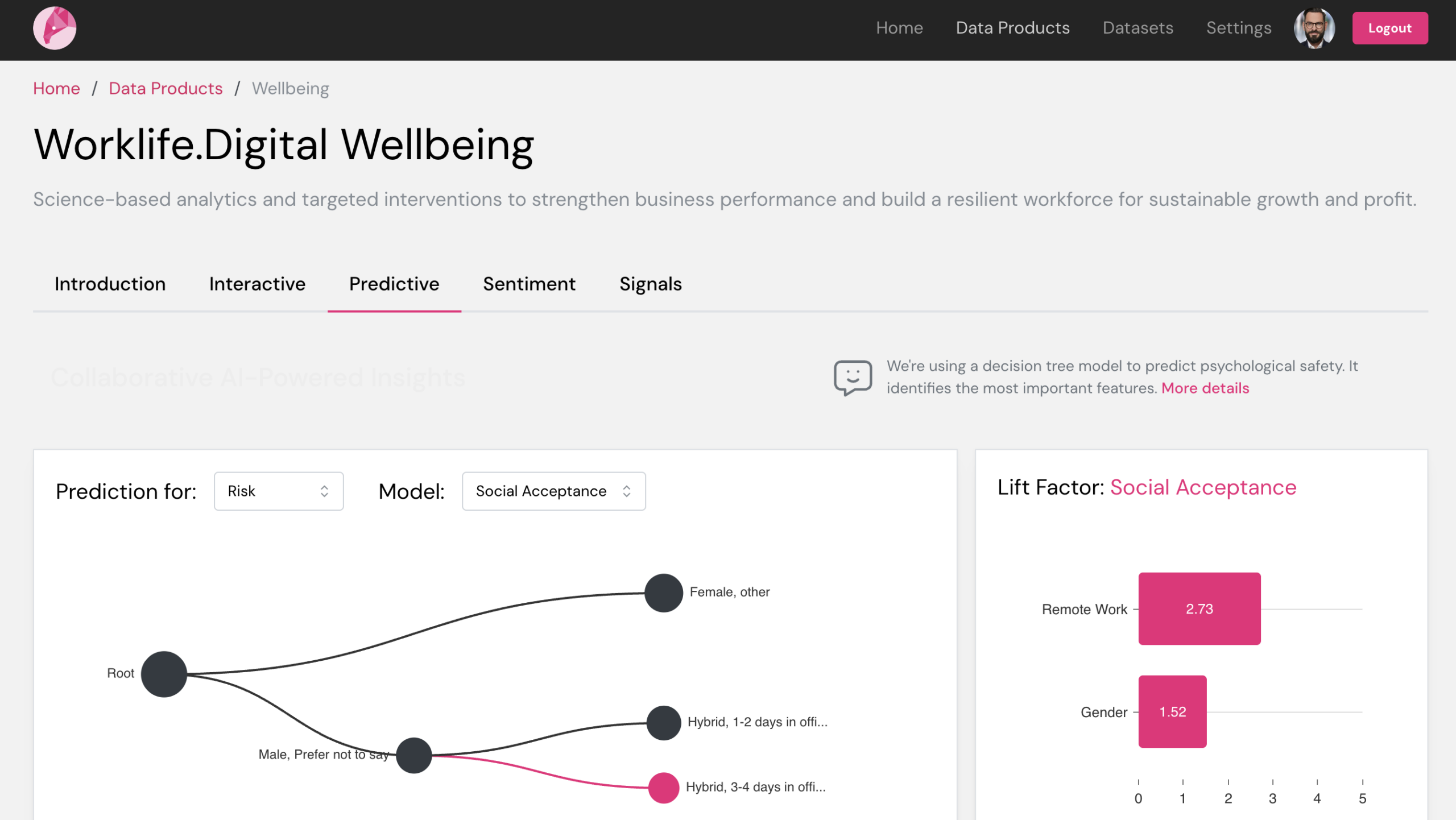
- Decision Trees: Understand root causes and find leverage points
- Learn from Outliers: Identify and learn from Outliers in your population
- Co-Create with Peers: Co-create our data product with peers and unlock wellbeing data network effects together
Your Business Outcomes: A Healthier Bottom Line
- Reduce Hidden Costs: Identify stress risks (like the 55% of leaders struggling with stress management) before they lead to costly exits.
- Boost Performance: Cultivate a culture of curiosity and personal growth that drives innovation.
- Evidence-Based Investment: Finally prove the ROI of your people and culture initiatives with hard data.
Target Group
- Organisations
- All Organisations with a focus on the following geographies: EU, Switzerland, UK, USA, Japan
Typical Roles
- People responsible for Wellbeing
- Business Unit Leads, CHRO, HR Strategy, People Analytics Leads, Technical Roles, Employee Experience Leads
Case Study
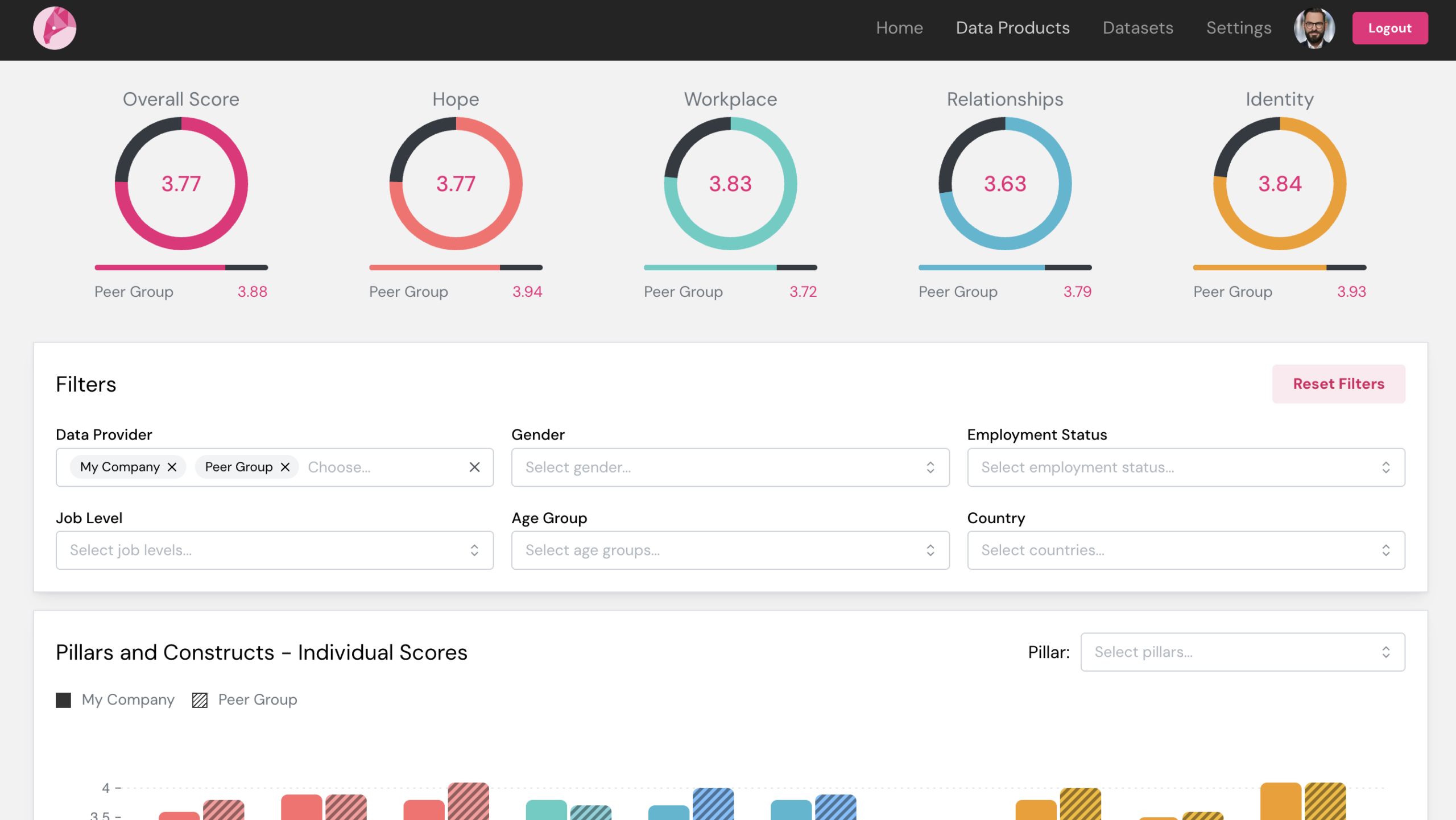
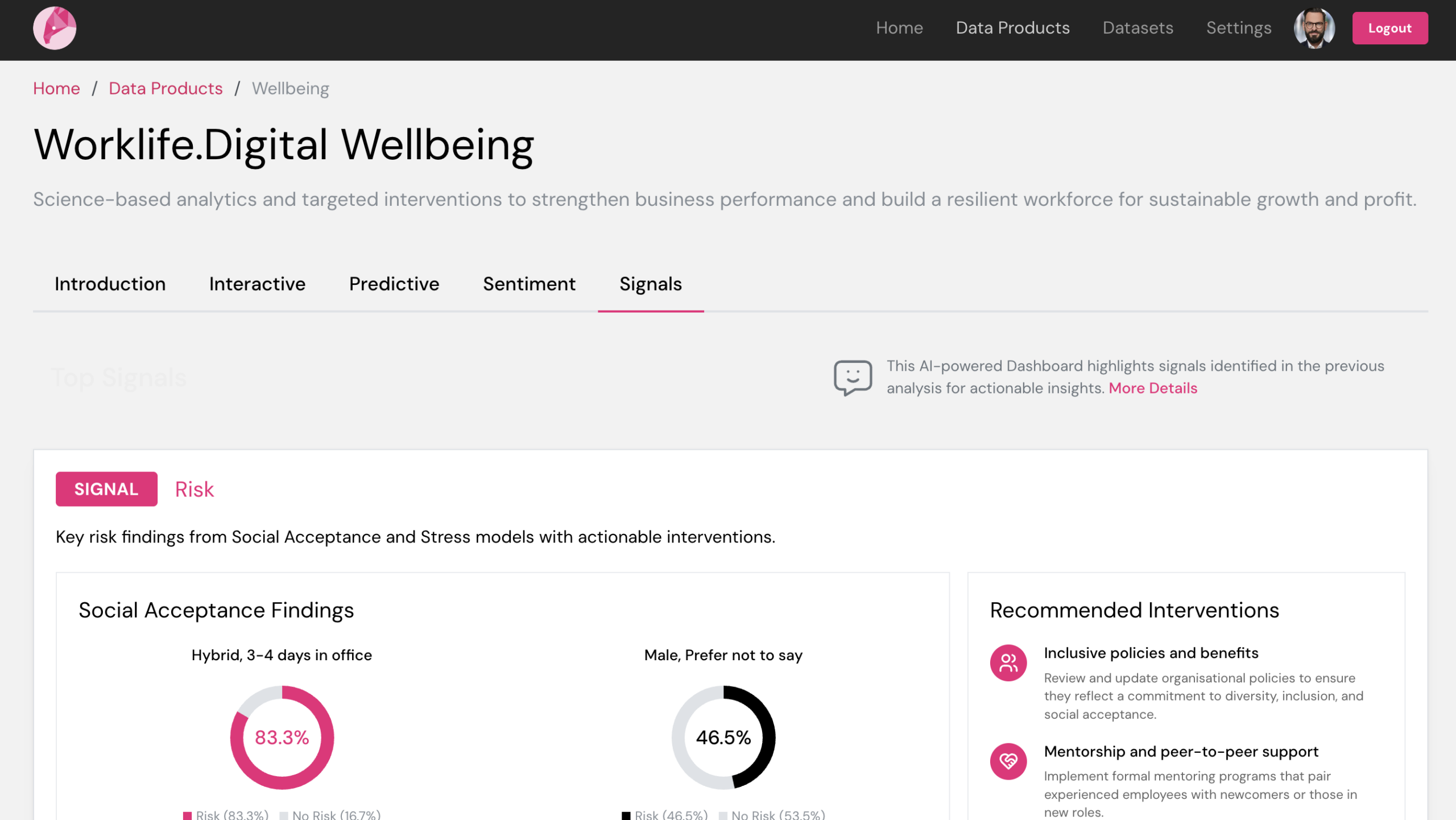
These dashboards present Worklife.Digital wellbeing insights embedded in Tapir, providing a structured overview of wellbeing patterns, resilience, and key influencing factors such as leadership, culture, and workload. They make complex people data accessible through clear analytics and benchmarking, supporting evidence-based prioritisation and informed decisions around wellbeing and organisational culture.